
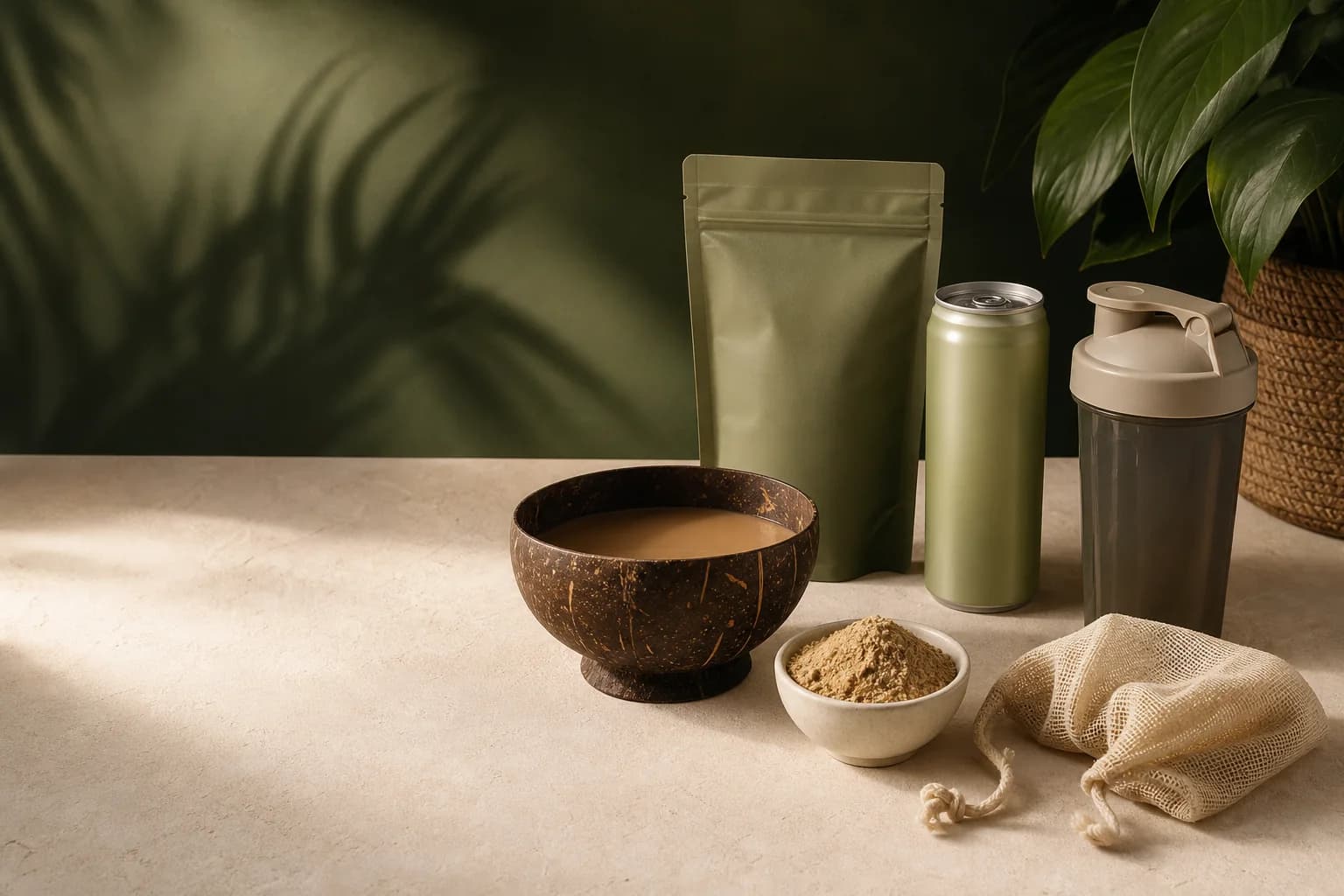
The best instant kava is a true instant product whose maker tells you exactly how it was produced, what kava went into it, whether root fiber remains, and how many honest drinks the package makes. Start with Nakamal at Home if named products and linked reports matter most, look at Kavahana when a clearly explained cold-pressed process appeals to you, and use Kalm with Kava as an approachable place to compare convenient formats. But read the exact product page. “Instant,” “micronized,” “extract,” and “drink mix” are not four names for the same thing.
I have drunk kava daily for more than 20 years and visited more than 500 kava bars. I love a well-made traditional batch, but I also live in the real world. Sometimes I want kava in a hotel room, at a desk, after a long drive, or at home when I have no interest in washing a bowl and strainer. True instant earns its place by removing friction. It does not need to impersonate traditional preparation to be useful.
This guide is for people choosing a powder they can mix quickly. If you want root to knead and strain, read the traditional kava powder guide. If you want a finished can or bottle, compare ready-to-drink kava. If you are still deciding among every major format, start with the broader best kava guide. Keeping those questions separate is the fastest way to avoid buying the wrong thing.
My short list
| Starting point | Best for | What to verify before ordering |
|---|---|---|
| Nakamal at Home instant kava | Named instant products, cultivar choice, and linked report collections | Exact product, package, current report, and availability |
| Kavahana Kava Nectar | A clearly described cold-pressed, strained, dried quick-mix process | Package yield, mixing directions, and cost per drink |
| Kalm with Kava instant | An approachable first browse with preparation education | Whether the exact item is true instant, micronized, a mix, or a concentrate |
| Fiji Vanua Kava instant | A Fijian-focused true-instant option | Cultivar, process, package size, current documentation, and shipping |
| Art of Kava instant | Origin- and cultivar-led browsing | Exact process, because nearby no-prep products can use different formats |
This is not a potency ranking. I will not pretend that a brand name predicts the exact character of every product or batch. The useful comparison is process, identity, documentation, yield, and fit for your routine.
True instant, micronized, extract, and drink mix are different products
The first job is not picking a vendor. It is identifying what is in the package.
True instant kava
True instant begins with prepared kava liquid or juice. The fibrous material is removed during production, and the liquid is dried into a shelf-stable powder. You add water and mix it again. Different producers may press fresh root, prepare dried root, strain at different stages, or use different drying methods, so “true instant” still describes a family of processes rather than one universal recipe.
The practical point is simple: a true instant should not be ordinary root powder made smaller. It should be a prepared-and-dried kava product. It may disperse rather than vanish like sugar, and some settling can still happen. “Instant” does not promise a crystal-clear solution.
Micronized kava
Micronized kava is very finely milled root material, often with some coarse fiber removed. It can be fast to mix, which is why stores sometimes place it beside true instant or use convenience language around both. But the process and remaining plant material are different.
That difference can show up in texture, sediment, and how much fiber you consume. Some product directions say no straining is needed; others may be better strained for the experience you want. Follow the exact label. Do not let a collection name overrule the product description.
Extract or concentrate
An extract concentrates selected components from kava into a smaller amount of material. It may be a powder, paste, liquid, capsule, or part of a shot. Its serving directions cannot be borrowed from traditional root or true instant. If the seller does not clearly identify the extraction format, carrier ingredients, and serving information, I would leave it alone.
Extracts have a legitimate audience, but this page does not rank them. A “strongest instant” search often drifts into extract territory, where the products stop being comparable. Bigger numbers on unrelated labels do not create an honest contest.
Formulated drink mix
A drink mix can contain kava plus flavor, sweetener, acids, other botanicals, or functional ingredients. That may improve taste and portability. It also means you are evaluating the whole formula, not only kava. Read every ingredient and compare it with the simpler powder you thought you were buying.
If flavor is your main priority, the kava drinks comparison is the better next page. If a bag says only “quick mix” while staying vague about process, ask the seller what it actually is.
Best instant kava starting points
Nakamal at Home instant kava: best starting point for named products and reports
Nakamal at Home is my first browse when someone wants true instant with a more specific product trail. Its catalog separates named instant lines such as Epik Instant and Fire Island Instant, and it keeps report collections discoverable. That is more useful than a single brand-wide promise because you can try to match a document to the product in front of you.
The strength here is specificity, not a guarantee that every item will always be available or documented in exactly the same way. Cultivars, packages, inventory, and reports can rotate. Confirm the name on the bag, the format on the page, and the report attached to that product. If a report is old or the match is unclear, ask before buying.
This is also a good example of why I prefer named products to vague “island blend” language. A name gives you something to reorder and something to question. It does not prove a perfect batch, but it gives the conversation a real starting point.
Kavahana Kava Nectar: best for a clearly explained cold-pressed format
Kavahana describes Kava Nectar as a cold-pressed whole-root instant made by pressing kava, removing the root fiber, and drying the resulting juice. That process explanation earns attention. It tells the buyer why the powder is not simply micronized root and why kneading or straining is not the intended routine.
This is a distinct product style, not evidence that every instant should be made the same way. Evaluate it on its own terms: how the exact variety is identified, how the package says to mix it, how many drinks the package realistically makes, and whether its texture fits you. Do not take a smooth label and turn it into an unsupported claim about effects or potency.
Kava Nectar also sits near the boundary between a pantry ingredient and a quick beverage system. You still add the water and choose the finished drink. If you want a sealed can you can grab from a refrigerator, that is a different job.
Kalm with Kava instant: best for an approachable first browse
Kalm with Kava has a broad, familiar catalog and explains the difference between its instant and micronized formats in useful plain language. Its own process description says its instant comes from dehydrated fresh green kava juice after coarse fibers have been removed, while micronized products are finely ground root with much of the coarse fiber removed. That is the kind of distinction buyers need.
The tradeoff is catalog breadth. Kalm with Kava also sells medium grind, micronized products, concentrates, mixes, and other convenient formats. That gives a beginner options, but it makes reading the exact title and directions essential. Do not add three different products to a cart because their thumbnails all look like mixable powder.
For a first order, choose one clearly identified format and a manageable package. Learn how it mixes and whether you actually use it. A recurring order is not a personality test; let the first bag earn the second.
Fiji Vanua Kava instant: best for a Fijian-focused option
Fiji Vanua Kava keeps true-instant choices inside a catalog strongly oriented toward Fijian kava. Its current instant descriptions include dehydrated green-juice products and explicitly distinguish at least some of them from micronized powder. That makes it a useful stop when origin focus matters.
The buyer still needs to inspect the exact item. Look for the named process, cultivar or root details, package weight, current documentation, and shipping terms. Product marketing may include effect language or impressive numbers; I would not use either as a substitute for product identity and a repeatable preparation method.
Fijian focus is a meaningful browsing filter, not a reason to assume every bag from the catalog behaves the same. The online kava buying guide explains how to separate an origin preference from the rest of vendor due diligence.
Art of Kava instant: best for origin- and cultivar-led browsing
Art of Kava organizes much of its catalog around places and cultivars, which is a better way to browse than chasing fantasy strength names. Its no-prep and instant area can help a shopper connect convenience with a more specific kava identity.
Here the format check is especially important. Current browsing can put a true instant product near an item explicitly described as micronized instant. Those are not automatically the same process. Open the individual product, find out whether it is prepared-and-dried liquid or finely processed root, and follow that product’s directions.
Use Art of Kava when origin and cultivar are part of the decision. Do not assume the collection heading has already done the technical reading for you.
How I judge an instant kava
After thousands of sessions, I care less about a dramatic promise and more about whether a product makes sense from package to shell.
The process is stated in ordinary language
I want to know whether the maker prepared and dried a liquid, pressed fresh root, micronized dried root, or created an extract. A proprietary process can keep its trade secrets while still telling me what category I am drinking.
Words like “premium,” “ceremonial,” “maximum,” and “advanced” do not answer that question. A clear process sentence does.
The kava has an identity
Origin, cultivar, root composition, or a stable named product gives you a way to understand and repeat the purchase. Not every good blend needs a cultivar on the front, but the seller should offer more than mood adjectives.
If you want to understand the plant and the drink before comparing these details, read what kava is. Product names make more sense when you know what part of the tradition and supply chain they are trying to describe.
The fiber and straining expectation are clear
The page should say whether meaningful root material remains and whether the product is designed to be consumed without straining. This is one of the cleanest separators between true instant and micronized root.
Do not invent your own universal rule. The correct instruction is the one for the exact product, provided the format is honestly labeled.
Documentation matches the product
A testing or sourcing page for the entire company is background. A product- or batch-linked document is more useful. Match names, dates, lots, and packages where possible. If the seller makes the trail easy to follow, that is a real advantage.
I do not convert a report into a homemade potency league table. Different methods, samples, batches, and product forms can make the numbers look more comparable than they are.
The directions create a repeatable drink
Good directions tell you how to begin without encouraging a stunt. The product should be easy to measure, mix, and adjust in small steps. Your first preparation is a baseline, not a contest.
The how to drink kava guide covers shells, pacing, taste, and the social rhythm. Instant saves preparation time; it does not require you to rush the drinking part.
Calculate convenience honestly
Instant usually asks you to pay for work already done: preparation, separation, drying, packaging, and reduced cleanup. That can raise the bag price while still creating good value for the right person.
Use this basic comparison:
Delivered package cost ÷ realistic number of prepared drinks = estimated cost per drink
The hard part is the realistic number. Use the exact package weight and the maker’s starting directions. Do not use the largest claimed yield if you already know you will mix differently. Add shipping, discounts you can actually receive, and any flavor ingredients you plan to use. Ignore subscription pricing unless you truly want a subscription.
Then compare the hidden costs:
- Does traditional preparation require gear you do not own?
- Will a large medium-grind bag sit untouched because weekdays are hectic?
- Does instant prevent wasted batches or impulse purchases of expensive prepared drinks?
- Will you travel with it often enough for the small package to matter?
- Are you paying for a blend of added ingredients you did not want?
A traditional bag can be cheaper per prepared drink and worse value for a person who never makes it. An instant can be expensive by weight and excellent value if it replaces a routine you regularly avoid. If the seller decision is becoming bigger than the format decision, compare the shortlisted shops in best kava vendors.
Where instant kava genuinely wins
Travel
True instant needs a cup, water, and something to stir with. That is a major advantage in hotel rooms, airports, camp setups, and visits where carrying wet strainer gear makes no sense. Keep the powder in its labeled package and check the practical rules for your destination.
Work and small kitchens
No large bowl, no damp bag, and no root debris make instant easier in shared sinks and tight spaces. You can prepare one drink without turning the break room into a production.
Consistency
Measuring the same powder into the same amount of water can reduce the variation introduced by changing knead time, bag pressure, and batch size. It does not erase batch variation or individual response, but it simplifies your side of the routine.
Learning whether kava fits your life
A small true-instant package is a low-equipment way to learn the taste, pace, and place kava might have in your week. If the ritual later becomes important, graduate to traditional powder and a proper strainer or shaker setup. You do not need to buy the whole hobby on day one.
A backup to a traditional routine
Many experienced drinkers keep both formats. Traditional root owns the planned session; instant handles the night when time disappears. That is not inconsistency. It is a routine designed to survive real life.
What instant cannot replace
Instant removes the making, and the making is part of traditional kava.
When I prepare a bowl, the water, root, bag, pressure, time, and group all shape the session. Pouring shells creates a shared pace. The person making the batch has a role. The drink changes as it settles and as rounds continue. Instant can deliver a legitimate kava drink, but it cannot recreate every social cue by promising “authenticity” on a pouch.
That distinction matters after visiting hundreds of kava bars. The best rooms are not memorable because brown liquid arrived quickly. They are memorable because preparation, service, conversation, music, regulars, and hospitality came together. If that is what you want, use the kava bar finder and try a real venue. If you want to understand what makes those spaces different, read what a kava bar is.
Instant should be proud of its actual job: convenient kava with very little equipment.
Mistakes that make instant kava harder to buy
Shopping by “strongest”
Potency language is seductive because it makes the decision feel measurable. But labels, laboratory methods, formats, batches, and serving sizes do not automatically line up. A responsible shortlist should not manufacture an exact winner from incompatible claims.
Choose process and identity first. Learn the product at its stated starting preparation. A louder bag does not know your body or your evening.
Treating “no prep” as proof of true instant
Micronized root, extracts, and formulated mixes can all be quick. Convenience tells you how little work is required, not how the product was made.
Comparing only bag prices
Different package weights and directions make shelf price nearly useless. Calculate delivered cost per realistic drink, then include the value of time, cleanup, and waste.
Assuming a vendor-wide claim covers every item
Catalogs evolve. Products use different suppliers, batches, and processes. Match the evidence to the named product.
Buying bulk before learning the format
Instant stores easily, which tempts people into large orders. Start smaller. Make several ordinary drinks. Decide whether you like the texture, taste, preparation, and role it plays in your routine.
Expecting a canned flavor experience
Plain instant kava can still taste earthy, bitter, and peppery. It is convenient, not automatically delicious. If you want a finished flavored beverage, shop that category honestly instead of blaming plain instant for being kava.
A simple first-order path
- Decide that you want a powder to mix, not a can, traditional root, or extract.
- Choose true instant or micronized on purpose.
- Shortlist two or three named products with clear process descriptions.
- Compare package weight, starting directions, documentation, shipping, and realistic cost per drink.
- Buy one smaller package.
- Prepare it exactly as directed before changing the recipe.
- Keep a short note on product, batch, water, amount, and whether you would repeat it.
That small note is more valuable than memorizing somebody else’s ranking. Over time, you learn whether you prefer a particular origin, cultivar, texture, or process. For more buying discipline, use the checklists in where to buy kava. For the larger library of preparation and culture topics, browse the kava guides.
Frequently asked questions
What is the best instant kava for a beginner?
Start with a true instant whose exact product page explains the process, identity, mixing directions, and documentation. Nakamal at Home is a strong first browse for named instant products and report access; Kalm with Kava is approachable for comparing convenient formats. Buy a small package and verify that the item is true instant rather than assuming every quick-mix powder is the same.
Is true instant kava the same as micronized kava?
No. True instant is generally made by preparing or pressing kava liquid, removing fibrous material, and drying the liquid. Micronized kava is finely processed root material, often with some coarse fiber removed. Both can mix quickly, but their process, fiber, texture, and directions can differ.
Does instant kava dissolve completely in water?
Not necessarily. A true instant may disperse into water and still create cloudiness or settling. Complete clarity is not the definition. Mix as directed, stir again if it settles, and judge the product by an honest process description rather than a promise that it behaves like sugar.
Does instant kava need to be strained?
Many true instant products are designed for no straining because the fiber was removed during production. Micronized products may retain more root material, and directions vary. Follow the label for the exact product. If the page is unclear about fiber or straining, ask the seller before ordering.
Is instant kava stronger than traditional kava?
There is no universal answer. Product, batch, cultivar, preparation, serving, and the person drinking all matter. I would not rank unlike products with a single potency number. Choose the format for its job, start with the stated directions, and learn the exact product instead of chasing “strongest.”
Why does instant kava often cost more?
The producer has already done more of the preparation: processing liquid, separating fiber, drying, and packaging a concentrated shelf-stable powder. Compare estimated cost per prepared drink rather than cost per ounce. Time saved, reduced cleanup, shipping, and whether you actually use the package belong in the value calculation.
Is instant kava the same as canned kava?
No. Instant is a shelf-stable ingredient you mix with water. Canned kava is a finished beverage and may include flavors, sweeteners, caffeine, or other botanicals. Compare cans in the best kava drinks guide and read the full ingredient panel.
Can I travel with instant kava?
Its small package and minimal equipment make it the easiest kava format for many trips. Keep it in clearly labeled packaging, protect it from moisture, and check the rules that apply to your carrier and destination. A travel advantage is not permission to ignore local requirements.
Should I buy instant kava in bulk?
Not for a first order. Try a smaller package across several normal sessions. Confirm that you like the taste, texture, process, and place it holds in your routine. Bulk makes sense only after the exact product has earned a repeat purchase and you have checked current storage and shipping details.