
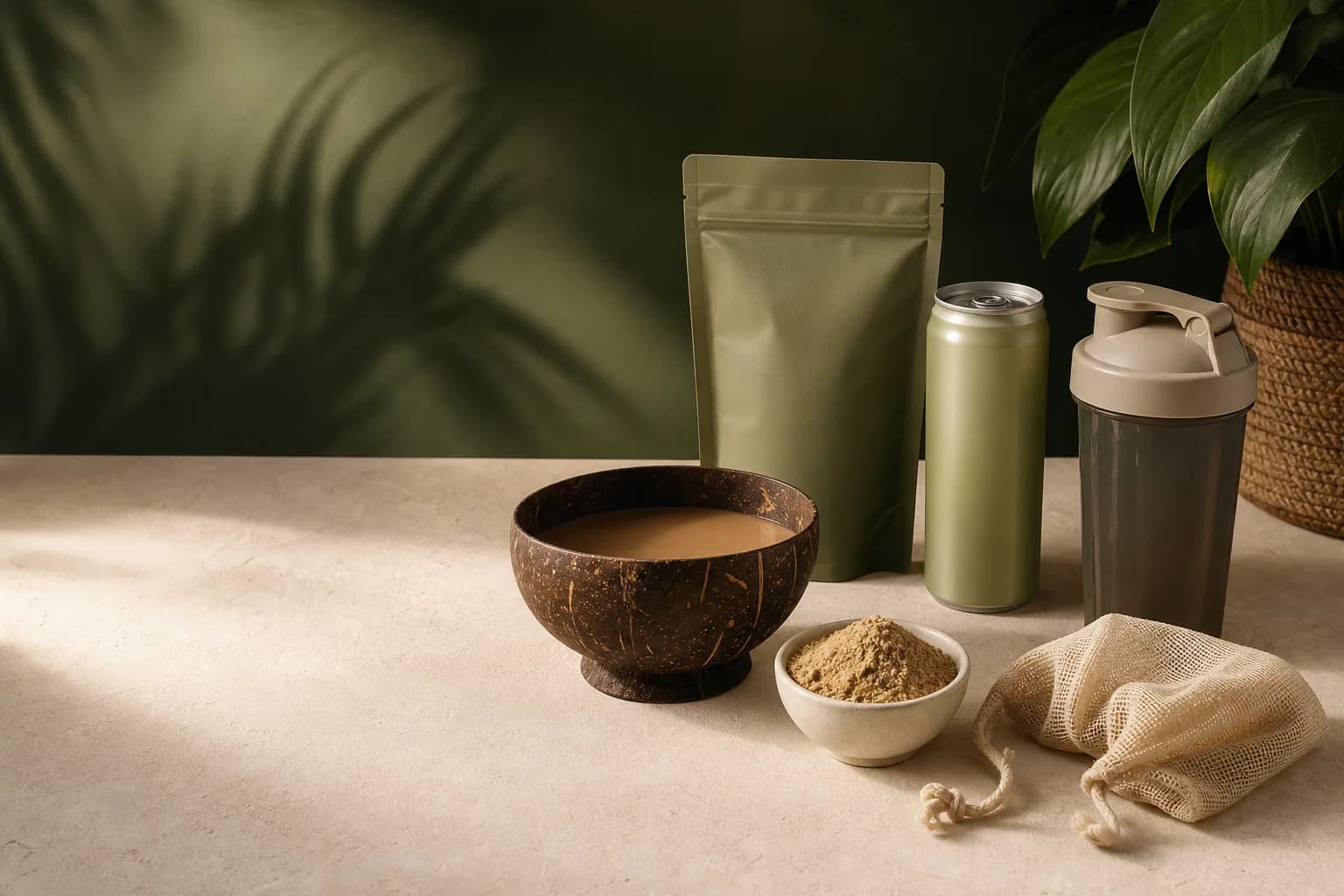
The best kava strainer is the one that fits the kava you actually bought and the amount you will actually make.
For traditional medium-grind kava at home, a reusable food-contact strainer bag is still the best starting point for most people. It is simple, inexpensive, easy to inspect, and gives you direct control over the knead and strain. If you want a contained portable setup for smaller batches, the Kavafied AluBall Kava Maker is the obvious comparison point. If you regularly make larger or repeated batches, the Kavafied Magic Kava Bucket is the more relevant system to investigate.
That is the quick answer after more than twenty years of drinking kava daily and seeing preparation methods in hundreds of kava bars. Most people do not need the cleverest gadget. They need to stop forcing the wrong tool into the wrong job.
A fine-mesh bag, an AluBall, and a bucket system are not three versions of the same object. They create different workflows. One gives you tactile control. One prioritizes containment and portability. One is built around volume and repetition. Decide which workflow you want before comparing logos, bundles, or accessories.
The quick answer by workflow
| Your real use case | Best starting point | Why it fits | What to inspect before buying |
|---|---|---|---|
| Traditional kava at home | Reusable food-contact strainer bag | Low complexity, direct kneading control, few parts | Bag dimensions, mesh, seams, material, drawstring, wash and dry routine |
| A contained individual or small batch | Kavafied AluBall Kava Maker | Bottle-and-filter-ball system keeps the process portable | Compatible grind, usable capacity, ball condition, closures, replacement availability |
| Larger or repeated batches | Kavafied Magic Kava Bucket | A dedicated bucket workflow makes more sense when volume and repetition rise | Footprint, batch process, cleaning access, seals, filters, wear parts |
| Accessories added to an existing kava order | Kalm with Kava or Art of Kava accessory catalog | Convenient place to compare bags, cups, and small gear | Exact dimensions, material, intended batch size, care instructions |
| True instant kava | Usually no strainer | The point is direct mixing according to the product directions | Confirm that the product is actually true instant |
| Commercial production | A documented bar workflow, not a random kitchen gadget | Volume, sanitation, consistency, and service speed change the decision | Start with the kava bar equipment list and evaluate machines separately |
Do not buy a strainer merely because a product page says “kava accessory.” Start with the format in your cabinet. If you have not bought the kava yet, use the traditional kava powder guide or the instant kava guide first.
Start with the kava format, not the hardware
The most common preparation mistake happens before water ever touches root: somebody buys traditional kava and expects it to dissolve, or buys true instant and assumes it needs to be worked through a bag.
Traditional medium-grind root is normally prepared in water and strained. It is the natural territory of a reusable bag, a shaker system designed for a compatible grind, or a larger batch system. The tool has to let water move through the material while holding back enough coarse fiber to create a drinkable result. The exact recipe belongs in the guide to how to drink kava; the hardware decision starts with recognizing that traditional grind needs an extraction-and-straining workflow.
True instant kava is made for direct mixing according to the seller’s directions. Buying a fine strainer for it adds a job the product was supposed to remove. Micronized products sit in a different category. They may retain fine root material, their texture varies, and their directions deserve to be read literally. Extracts and flavored mixes introduce still more differences. “Powder” is a physical description, not a complete preparation instruction.
If those categories still feel fuzzy, read what kava is before buying equipment. Then check the exact product page, preparation directions, and grind. A tool cannot rescue a category mistake.
Mesh is the decision people skip
Shoppers love to compare bottles, colors, handles, and brand names. Mesh does most of the actual work.
A more open mesh generally allows faster flow and more fine material into the drink. A tighter mesh generally holds back more particles but can take more effort and may slow the process. That is a tradeoff, not a universal ranking. The correct balance depends on the grind, the preparation method, the texture you prefer, and whether you are making one bowl or repeating the job through service.
I would not pretend there is one magical mesh number for every bag and every kava. Sellers describe grind and mesh differently, and an exact-looking number can create false confidence when the material, weave, seams, or product directions are unclear. Match the strainer to the grind recommended by the kava seller. If either side of that match is vague, ask before ordering.
Inspect the whole bag, not merely the body fabric:
- Are the seams smooth, intact, and easy to rinse?
- Is the opening large enough to load without spilling root everywhere?
- Does the drawstring or closure stay out of the way while kneading?
- Is the bag deep and wide enough for the planned batch?
- Does the seller identify the food-contact material?
- Can you turn or manipulate the bag enough to clean the corners?
- Is the mesh consistent, without visible snags or stretched sections?
A bag that filters beautifully but is miserable to load, grip, or wash is not the best bag for your routine.
A traditional strainer bag is still the baseline
Traditional preparation is not obsolete just because portable hardware exists. A bowl and a good bag remain the clearest way to understand what is happening.
You load the bag with the appropriate kava, work it in water, and feel the material change as you knead and squeeze. That physical feedback matters. You can adjust your technique, watch the liquid develop, and decide when the batch is finished. There are no proprietary filter balls, bottle threads, or machine parts between you and the process.
The advantages are straightforward:
- Low initial complexity.
- Direct control over agitation and squeezing.
- Easy visual inspection of the bag and kava.
- Flexible batch size within the limits of the bag and bowl.
- Few replacement parts beyond the bag itself.
- A workflow close to the preparation many people encounter at a traditional-minded kava bar.
The tradeoff is equally real. Your hands are in the process. You need a bowl or bucket. Splashes happen. Cleanup cannot wait until tomorrow. If your idea of a nightly drink is “add water, shake, and leave,” the traditional bag may be the tool you respect and never use.
That is why I separate the best tool on paper from the best tool in a real kitchen. If the ritual attracts you, begin with the bag. If the ritual is exactly what keeps you from preparing kava, choose the simpler workflow honestly.
For the serving culture around the finished drink, see the kava shell guide. The shell and the strainer solve different jobs: one serves the drink; the other makes it.
Shaker cups win on containment and portability
A shaker system moves preparation into a closed container. The Kavafied AluBall Kava Maker is the best-known current comparison in this category: a shaker bottle paired with a filter ball intended to contain the kava while the bottle supplies agitation.
Its appeal is obvious. You can make a smaller batch without setting out a bowl, plunging both hands into the water, and managing an open bag. It is easier to picture at an office, while traveling, or in a kitchen where speed and contained cleanup matter more than ceremony.
But convenience changes the mechanics. A filter ball has finite space. The bottle has finite capacity. Shaking is not identical to working a larger bag by hand. The compatible grind, amount loaded, water volume, agitation, closure, and condition of the filter all affect the workflow. Do not assume that a recipe written for a large traditional bag transfers directly into a ball.
Before buying any shaker system, ask:
- Does the manufacturer describe it for the exact grind I use?
- What is the practical batch size after leaving room for movement?
- How many filter elements are included?
- Can I inspect the mesh and closures easily?
- Are replacement balls, caps, seals, or bottles currently available?
- Can every wet part be opened, rinsed, and dried?
- Will the shape fit where I actually plan to carry it?
The AluBall is not automatically better than a bag. It is better when its contained, smaller-batch workflow solves your problem. That distinction keeps this guide from becoming another lazy list of products with “best overall” stamped on top.
Bucket systems make sense when batches repeat
Once you move from an individual bowl to larger or repeated batches, the annoyance changes. Loading, kneading, transferring, straining, and cleaning the same small setup again and again can eat time.
The Kavafied Magic Kava Bucket belongs in that conversation. It is a dedicated bucket-based system aimed at a larger or repeated-batch workflow. That does not make it the automatic upgrade for every home user. It asks for storage, a clear cleaning routine, more money than a basic bag, and attention to its filters, seals, fittings, and replacement parts.
Volume alone should not make the decision. Frequency matters too. A larger system can be excessive if you make one modest batch on Saturday. It becomes more logical when the same process repeats, when multiple people are being served, or when a smaller setup forces several cycles.
For a venue, preparation gear has to fit the entire station. Water access, sinks, drainage, cold storage, service vessels, batch records, staff movement, and cleaning schedules matter more than one product’s marketing photo. Operators should use the full equipment planning guide, then compare any powered option through the kava-making machine guide. A bucket system may occupy a useful middle ground, but it does not replace workflow design.
Choose by batch size you make most often
Do not size your setup for the fantasy party you host twice a year. Size it for the batch you make most often.
One person or one short session
A modest reusable bag or a compatible shaker system is usually the sensible range. The decision is mostly about whether you want tactile traditional preparation or contained convenience. A huge bag in a huge bowl can make a small nightly batch unnecessarily awkward.
Several servings at home
A traditional bag with comfortable working room becomes attractive. You can control the batch without crowding the root inside a small filter. If you strongly prefer closed preparation, look carefully at the stated usable capacity of the shaker rather than the bottle’s headline volume.
A group, event, or repeated service
Now throughput matters. Loading time, water handling, transfer, consistency, and cleanup between batches become visible. A dedicated bucket system or a properly evaluated machine may earn its footprint. If this is part of a business concept, preparation volume should come after the menu and financial model in the guide to opening a kava bar, not before.
The best batch tool is the smallest system that handles your normal volume comfortably without forcing poor loading, weak movement, spills, or repeated cycles.
Material and construction matter more than accessories
Food-contact material, mesh consistency, seams, closures, and cleanability are the core purchase. A free scoop or branded cup does not compensate for uncertainty there.
For a bag, look for an identified material and care directions. For a bottle system, inspect the bottle, filter, lid, threads, seals, and any place fine root can lodge. For a bucket system, trace the wet path from loading through dispensing. Every hidden corner becomes your problem after the first batch.
I also look at how a tool fails. A bag usually shows wear: stretching, fraying, a loose seam, or a damaged drawstring. A multi-part system can develop a tired seal, damaged filter, worn thread, or missing component. Visible, replaceable wear is easier to manage than a proprietary part that quietly disappears from the market.
Brand catalogs from Kalm with Kava and Art of Kava can be useful when you are already placing a kava order and want to compare strainers or cups in the same cart. Convenience is not specification. Record the dimensions, material, care instructions, intended format, and replacement terms before adding the accessory.
The where-to-buy-kava guide helps choose the kava purchase route. Keep that decision separate from the hardware. A seller can offer excellent root and the wrong bag size for your kitchen—or useful gear and a kava format you do not want.
Cleanup is part of performance
People judge preparation gear while it is dry and clean. They live with it when it is wet, fibrous, and sitting beside a sink.
The best cleanup routine is immediate: empty the spent material, rinse every surface and seam thoroughly, remove trapped particles, and open the item so it can dry completely. Follow the manufacturer’s current care directions for the actual material. Do not invent a heat, soap, dishwasher, or sanitizer routine because a different product tolerated it.
A traditional bag should be easy to invert or manipulate so the corners and seams release material. A filter ball should open without a wrestling match and should not hide residue behind a closure. A bottle needs enough access to wash the base and threads. A bucket system needs a wet path you can reach, not merely a wide top.
Drying is not storage. A damp bag rolled into a drawer is an unfinished job. A bottle capped while wet is not ready for the next batch. If you do not have a clean place to hang or rack the components, include that in the setup.
This is where a theoretically fast gadget can lose. Saving five minutes during preparation and adding ten frustrating minutes at the sink is not convenience. When comparing tools, perform the cleanup in your head from the last pour to the final dry part.
Replacement parts decide the long-term value
A cheap bag that fits your workflow and can be replaced easily may deliver more value than an elaborate system tied to one hard-to-find component.
Before buying proprietary gear, check what wears and whether it is sold separately. Filter balls, screens, seals, lids, caps, containers, dispensing parts, and closures should not be mysterious. Save the exact model name. Similar-looking generations are not automatically interchangeable.
For a basic bag, the replacement decision is simpler. Retire it when the mesh is damaged, stretched beyond its job, permanently difficult to clean, or the seams and closure can no longer be trusted. Do not wait for the root to escape into the bowl in the middle of a batch.
Delivered cost matters, but current price alone is a poor ranking system. Compare the working setup: base tool, number of strainers or filters included, bowl or bottle needs, shipping, replacement parts, and realistic lifespan in your routine. The broad best kava guide can help you keep hardware spending proportionate to the kava format you prefer.
The bad purchases I would avoid
I would avoid any strainer or shaker when:
- The seller never identifies the intended kava format.
- The mesh or food-contact material is not described.
- Product dimensions are absent, making batch fit impossible to judge.
- The seams or closures cannot be seen clearly.
- A multi-part system has no discoverable replacement path.
- Cleaning instructions are vague even though the design has hidden surfaces.
- The pitch promises a stronger result without explaining the preparation process.
- A bundle mixes hardware and kava so aggressively that neither item can be evaluated on its own.
I would also avoid using a random kitchen sieve as though every mesh performs the same job. A kitchen tool may be food-contact equipment, but its shape, openings, seams, and handling were not necessarily designed for kneading traditional kava. Purpose matters.
Equipment does not create quality out of weak or mismatched material. Start with a clearly identified product from the best kava vendors comparison, then match the process. If you want packaged convenience with no home extraction at all, leave the hardware category and compare ready-to-drink kava beverages.
My verdict after twenty years around kava preparation
The reusable traditional bag wins the baseline recommendation because it teaches the process, works across sensible home batch sizes, costs little to enter, and has almost nothing to hide. It is the first tool I would put in front of somebody who genuinely wants traditional medium-grind kava.
The AluBall-style shaker wins a different contest: contained portability for a smaller compatible batch. It makes sense for the person who understands the traditional process but knows that an open bowl and wet bag will not survive their schedule.
The Magic Kava Bucket belongs with people making enough kava, often enough, that repeated small-batch handling has become the problem. It should be chosen after the buyer maps storage, cleaning, volume, and parts—not because “bigger” sounds more serious.
That hierarchy comes from watching real routines. Gear earns its place when it removes friction without hiding what the drink is or creating worse friction after the pour. Buy the workflow, not the gadget.
A final buying checklist
Before checkout, write down:
- Exact kava format and grind.
- Normal batch size, not maximum imaginary batch.
- Traditional, portable, or repeated-batch workflow.
- Mesh or filter compatibility.
- Food-contact material.
- Bag dimensions or practical container capacity.
- Seam, closure, lid, and seal construction.
- Loading and unloading process.
- Complete rinse, wash, dry, and storage routine.
- Included parts.
- Parts most likely to wear.
- Current replacement availability.
- Delivered setup cost rather than accessory price alone.
If you cannot answer the first three items, return to the kava format comparison and choose the drink before choosing its hardware. If you can answer them, the shortlist becomes simple.
Frequently asked questions
Do I need a strainer bag to make kava?
You normally need a suitable straining method for traditional medium-grind kava. A reusable food-contact bag is the simplest starting point. True instant kava is intended to mix according to its directions and usually does not need the traditional bag routine. Micronized products and mixes vary, so read the exact preparation instructions rather than deciding from the word “powder.”
What mesh size is best for a kava strainer?
There is no honest universal number for every grind and every preference. A tighter mesh generally retains more fine material and may slow flow; a more open mesh can move faster while allowing more particles through. Match the seller’s recommended strainer to the exact grind, then judge seams, material, dimensions, and handling as part of the same decision.
Is a shaker cup better than traditional kneading?
It is better for a specific job: contained, portable preparation of a compatible smaller batch. A traditional bag gives more direct control and flexible working room. Neither wins every category. Choose the shaker when containment and speed remove the friction that would stop you from making kava; choose the bag when process control and batch flexibility matter more.
Does an AluBall work with every kind of kava?
Do not assume that it does. Check the current manufacturer directions and the exact kava grind. True instant does not require the same extraction workflow, while material that is too fine or otherwise incompatible may not behave as intended in a filter ball. Capacity and loading also matter.
What size strainer should I buy?
Size it for your normal batch with enough room to load, move, knead, and empty the kava comfortably. A cramped bag restricts the workflow; an enormous bag can be clumsy for one person. For shaker and bucket systems, compare practical usable capacity rather than headline container volume.
When should I replace a kava strainer bag?
Replace it when the mesh is torn, stretched beyond its job, fraying, permanently difficult to clean, or when a seam or closure is no longer reliable. Inspect it while clean and dry, not only when it is full. A spare basic bag is sensible if traditional preparation is part of your daily routine.
Can I use a regular kitchen strainer?
A kitchen strainer is not automatically shaped or meshed for kneading traditional kava. Even if the material is food-contact, the openings, depth, edges, and handling can make the process poor. A purpose-built bag is inexpensive and gives you a clearer match between grind, movement, and filtration.
How should I clean and dry kava equipment?
Empty and rinse it promptly, remove material from seams, filters, lids, threads, and fittings, then follow the manufacturer’s care instructions for that exact material. Open or hang every wet component so it can dry fully before storage. Do not assume that dishwasher heat or a cleaning chemical approved for one product is appropriate for another.
Does better preparation gear make kava stronger?
No tool can guarantee a stronger drink. A well-matched, repeatable setup can help you control grind, water, batch size, agitation, and straining more consistently. The kava itself and the preparation process still matter. Treat strength promises attached to a gadget as marketing until the mechanism and conditions are clear.