
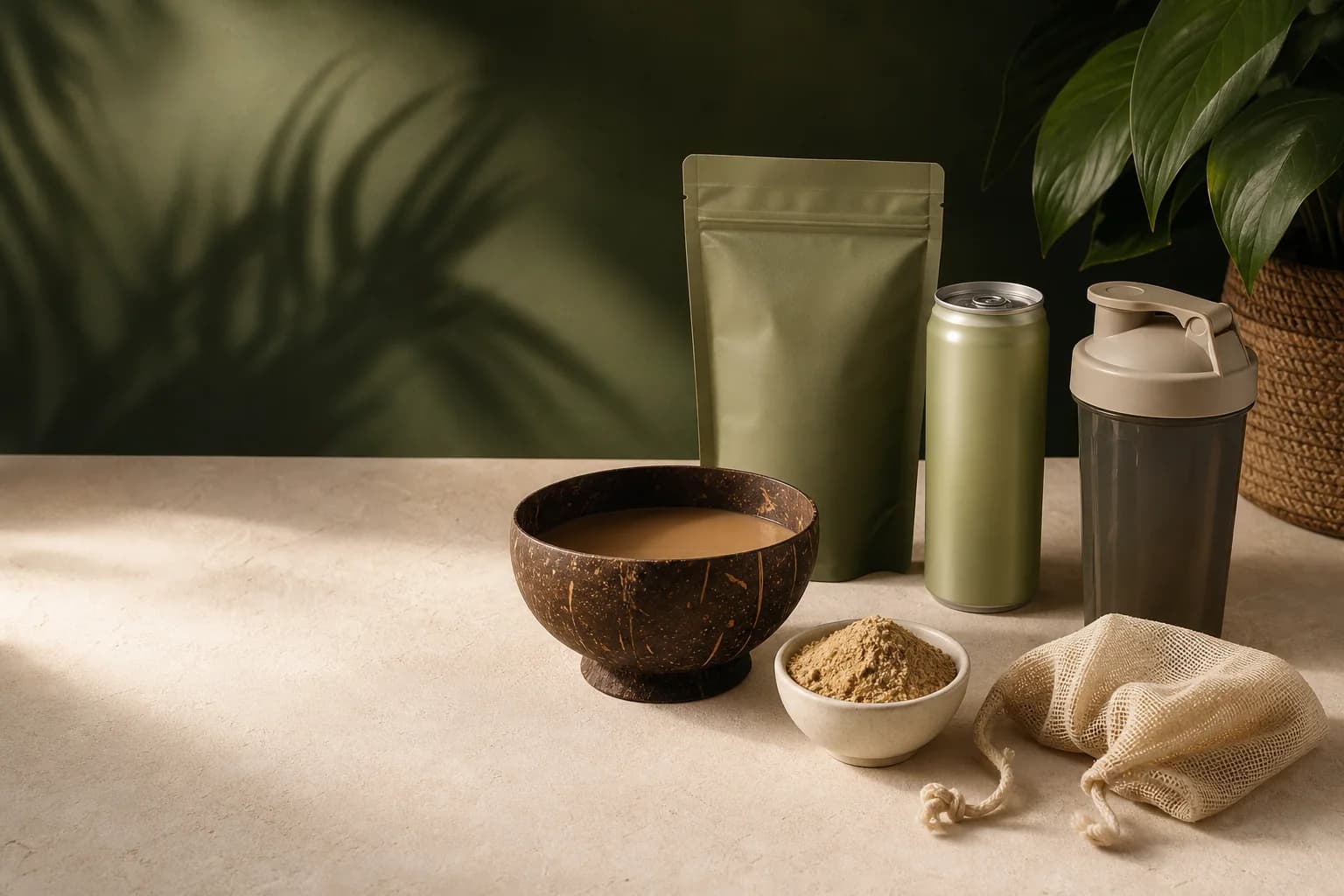
Buying kava is easy. Buying the right kind from a seller who tells you what it actually is takes another ten minutes.
For most people, the cleanest first purchase is one of two things: try a traditional serving at a real kava bar near you, or order a small quantity from a specialty kava seller that clearly identifies the format, origin, ingredients, preparation method, and current customer policies. Do not begin with the loudest potency claim. Do not begin with the biggest bag. Begin with the drink you are realistically willing to make.
That distinction matters because “kava” on a product page can mean traditional medium-grind root that needs kneading and straining, a true instant product that dissolves in water, micronized root, a concentrate, a flavored mix, or a ready-to-drink can. Those are different products with different preparation, texture, economics, and use cases. A cheap traditional bag is not a bargain if you wanted a thirty-second drink. An expensive instant may be the better value if it prevents the bag from dying unopened in a cabinet.
This guide gives you the route. If you already know the format and want a seller-by-seller scorecard, skip to the best kava vendors comparison.
The short answer: where should you buy kava?
| Your actual goal | Best first place to buy | What to verify |
|---|---|---|
| Understand what traditionally prepared kava is like | A current local kava bar | What is in the serving, how it was prepared, and whether other botanicals are present |
| Make kava at home with the traditional process | A specialty seller offering named medium-grind products | Exact grind, origin or cultivar detail, ingredients, preparation directions, and useful documentation |
| Make a fast drink with minimal cleanup | A specialty seller with clearly labeled true instant kava | Whether it is true instant, micronized root, or an extract; serving directions; complete ingredients |
| Buy kava plus a dedicated preparation system | A seller that stocks both root and purpose-built gear | Treat the root and equipment as two separate purchase decisions |
| Try a packaged drink | A local kava bar, specialty retailer, or packaged-beverage seller | Complete label, serving information, storage, shipping conditions, and what “kava” means in that product |
| Stock a commercial venue | Not this guide | Use the kava bar wholesale suppliers guide and qualify B2B terms |
General marketplaces and nearby stores can carry legitimate products, but the shelf is often a grab bag: capsules beside extracts beside tea bags beside instant drink mixes, all labeled “kava.” If the listing does not make the format and ingredients obvious, you should not have to reverse-engineer them from reviews.
Start with the format, not the logo
This is the decision most first-time buyers skip.
Traditional medium-grind kava
Traditional grind is meant to be worked in water and strained. It usually asks for a strainer bag or another suitable preparation method, a bowl or container, water, time, and cleanup. The process is part of the appeal for some people and exactly why other people never make a second batch.
Choose it when you want the hands-on method, intend to prepare more than one serving, or care enough about recipe control to learn the technique. Read the traditional kava powder guide before comparing bags. The word “powder” alone does not tell you whether a product is meant to be strained.
True instant kava
True instant is the direct route when convenience matters. It should mix according to the seller’s directions without the full knead-and-strain routine. That convenience often changes the cost per prepared drink, but cost is only one input. The useful comparison is whether you will actually prepare it.
The instant kava guide explains why instant, micronized, and extract are not interchangeable labels. If a seller buries the manufacturing or preparation distinction, do not fill in the blank with optimism.
Micronized products
Micronized usually refers to very finely processed root material, often with some fiber remaining. Texture and preparation can differ from true instant. Read the exact directions and determine whether the seller recommends straining. Never assume a fine powder dissolves merely because it disappears for a few seconds when shaken.
Concentrates and flavored mixes
Concentrates and mixes can be convenient, portable, and easier to flavor. They also require closer label reading. Compare the full ingredient list, serving directions, total volume, storage instructions, and what portion of the product is actually kava. Sweeteners, flavors, and other ingredients may fit your goal; they just should not arrive as a surprise.
Ready-to-drink kava beverages
Cans and bottled drinks solve preparation completely. They are their own category, not a replacement word for traditional kava. Check whether the drink contains other active ingredients, how the serving is defined, and whether it needs refrigeration. See the best kava drinks guide for the packaged-drink decision rather than comparing a can to a bag of root.
A practical retail shortlist
The sellers below are useful comparison starting points in the current BestKavaBar guide set. Inclusion is not an endorsement of every product, batch, claim, shipment, or customer experience. Catalogs and policies change. Verify the exact item you are ordering.
| Seller | Useful starting point for | What deserves attention |
|---|---|---|
| Kalm with Kava | A broad first order across traditional grind, instant, concentrates, and mixes | The range is wide. Confirm the exact format instead of treating every easy-prep option as “instant.” |
| Nakamal at Home | Named cultivars, traditional products, true instant, and discoverable report collections | Match any report to the exact named product or batch you intend to buy. |
| Fiji Vanua Kava | A focused Fijian catalog and larger package options | Compare cultivar, grind, root composition, package size, current documents, and shipping before buying volume. |
| Art of Kava | Shopping by named origin and cultivar | Origin is useful context, not a substitute for format, package weight, preparation, and current documentation. |
| Kavafied | Root sold alongside strainers, bowls, and portable preparation systems | Judge the kava and the hardware independently. Convenience does not make every bundle your best fit. |
| Bula Kava House | A traditional specialty catalog with origin- and cultivar-oriented descriptions | Confirm current inventory, fulfillment timing, exact format, and return policy before building a routine around it. |
If you want the longer comparison—including who each catalog suits and how to score vendors consistently—use BestKavaBar’s retail vendor guide. This page is deliberately narrower: get you from “I want kava” to one sensible order without wasting money.
What a trustworthy product page should tell you
A product page does not need to look luxurious. It needs to answer basic questions without making you hunt.
Look for:
- The exact format: traditional grind, true instant, micronized, concentrate, mix, or ready-to-drink.
- A complete ingredient list.
- Net weight or volume.
- Preparation and serving directions.
- Origin, cultivar, or product identity when the seller makes those distinctions.
- Storage instructions where relevant.
- Product- or batch-specific documentation when offered.
- Current shipping, damage, return, and support policies.
- A real way to contact the seller.
Named origin and cultivar information is more useful than vague color, strength, or lifestyle language, but names are not magic words. A place name does not tell you how to prepare the product. A “premium” badge does not define ingredients. A report for one item does not certify an entire catalog by association.
The discipline is simple: match the label, directions, and documents to the exact item in the cart.
How to compare the real cost
Bag price is the number a store wants you to see. Delivered, usable cost is the number your kitchen will feel.
Use this worksheet:
| Cost input | What to record |
|---|---|
| Product price | Price of the exact package before discounts |
| Shipping and applicable order charges | The amount needed to get that package to your door |
| Usable quantity | Net weight or volume, not package dimensions |
| Realistic servings | Your planned serving based on the product directions, not a heroic minimum |
| Required equipment | Strainer, shaker, bowl, storage container, or other reusable purchase |
| Preparation time | Active time you will actually spend |
| Waste risk | The chance you dislike the format, cannot store it, or will not use it before quality declines |
Then calculate:
delivered product cost ÷ realistic prepared servings = product cost per serving
Keep reusable equipment separate so you can see the first-order cost and the repeat-order cost. Do not invent a precise serving count when the product directions, your recipe, and the format do not support one. A dishonest decimal is still a guess.
Build a first order that teaches you something
The best first order is not the one that maximizes a coupon. It is the one that answers a useful question.
- Pick one preparation job. Traditional at home, true instant for travel, a packaged drink, or another clearly defined use.
- Choose one or two exact products. More variety can make it harder to identify what worked.
- Buy a small practical quantity. Larger bags can lower unit cost and raise regret at the same time.
- Get only the equipment the format requires. The strainer and shaker guide can help you avoid a drawer full of gadgets.
- Save the product name and batch information. If you want to reorder, “the brown bag I liked” is not an inventory system.
- Follow the seller’s directions first. Change one variable at a time after you understand the baseline.
- Record what mattered. Preparation time, texture, taste, cleanup, and whether the format fit the occasion are more actionable than a dramatic one-word verdict.
If you have never tried traditionally prepared kava and live near an active venue, try a shell before ordering a large traditional bag. Search the national kava bar directory, open the current venue profile, and confirm the hours before driving. The directory answers where to go; this page answers what to buy.
Buying kava locally without confusing store inventory with kava-bar discovery
People searching for “where to buy kava” often add a city, state, or “near me.” Those searches split into two different jobs.
If you want a prepared drink or a bartender who can explain the menu, use the directory. Start with the Florida kava bar guide, Colorado kava bar guide, Arizona kava bar guide, Texas kava bar guide, or another active state page. Local pages should show current venue identities and send you to the individual profile.
If you want a sealed retail product, call the store or bar and ask for the exact brand, format, package size, and current availability. An old search result or photo does not prove that a shelf is stocked today. “We sell kava” may mean prepared drinks only. “Botanicals available” may mean several products that are not kava.
For New York City, Utah, Hawaii, Oahu, and every other named market, the rule is the same: local intent does not excuse vague product information. Confirm before traveling.
Red flags that should end the purchase
Leave when the seller asks you to trust the mood instead of the product.
- Medical, cure, detox, withdrawal, or guaranteed-outcome promises.
- A mystery blend with no complete ingredient list.
- “Instant” used without enough information to distinguish the format.
- One generic document presented as proof for every product.
- No net quantity, no preparation directions, or no identifiable business contact.
- Permanent countdown timers and pressure-heavy scarcity theater.
- Reviews doing all the factual work that the product page refused to do.
- A marketplace listing whose title, image, ingredients, and seller disagree.
Reviews can reveal shipping patterns, packaging failures, or confusing directions. They cannot repair a missing label. Browse community reviews for venue experience, and use product reviews as supporting context—not as the product specification.
The label should describe the thing you are buying
A reputable store should not force you to decode a blend from a product name, a mood, and three customer reviews. The complete ingredients, format, preparation, serving information, and package quantity belong in the decision. If another active ingredient is present, it should be named plainly instead of disappearing inside vague “botanical” language.
Follow the exact directions for the exact product. Do not borrow the recipe for a traditional grind and apply it to an instant, concentrate, mix, or ready-to-drink product. Clear use information is part of product quality because it lets the customer repeat the purchase deliberately.
First-order checklist
- [ ] I know whether I want traditional grind, true instant, micronized, concentrate, mix, or ready-to-drink.
- [ ] I read the complete ingredients and preparation directions.
- [ ] I can identify the exact product, package quantity, and seller.
- [ ] I matched any documentation to the product or batch.
- [ ] I calculated delivered cost instead of staring at the sale banner.
- [ ] I know what equipment and active preparation time the format requires.
- [ ] I read current shipping, damage, return, and support terms.
- [ ] I chose a quantity I can reasonably use and store.
- [ ] I rejected medical promises, hidden ingredients, and pressure tactics.
- [ ] I saved enough product detail to make a deliberate reorder.
Frequently asked questions
Where is the best place to buy kava for the first time?
A specialty kava seller with clear format, ingredient, preparation, product identity, documentation, and customer-policy information is usually the most efficient retail starting point. If you have never tasted traditionally prepared kava, a current local kava bar can help you understand the drink before you buy a large bag.
Can I buy kava at a grocery or health-food store?
Some stores carry kava products, but inventory and formats vary. Read the exact label. Capsules, tea blends, concentrates, micronized root, traditional grind, and ready-to-drink beverages are not interchangeable just because they share a shelf word.
Should I buy traditional or instant kava?
Choose traditional grind when you want the knead-and-strain process and recipe control. Choose true instant when speed and cleanup matter more. Read how to drink kava and the dedicated format guides before deciding.
What matters more than the bag price?
Delivered cost, realistic servings, equipment, active preparation time, storage, and the likelihood you will use the product. The cheaper package can be the expensive choice when it does not fit your routine.
Is vendor-wide testing language enough?
Product- or batch-specific information is more useful. Match a report or specification to the exact item you intend to order and confirm that the identifying details are current.
How much kava should I buy first?
Buy enough to learn the exact product and preparation without creating a storage problem or forcing yourself through a poor fit. A repeat order is cheaper than an oversized first-order mistake.
Can I buy kava from a kava bar?
Some venues sell packaged products and some serve prepared drinks only. Search a current venue profile, then ask what retail products are available, in what format, and whether the item is currently in stock.
Is “instant kava” always true instant?
No. Sellers and marketplaces sometimes use instant loosely. Confirm how the product is described, whether root fiber remains, whether straining is recommended, and how the directions differ from a traditional preparation.
Where should a kava bar owner buy in bulk?
Use the kava bar wholesale supplier guide. Commercial purchasing needs specifications, samples, yields, minimums, lead times, freight, receiving rules, and approved backup supply. A consumer bestseller list is not a procurement program.
Continue the buyer journey
- Learn what kava is before comparing product language.
- Read how to drink kava for preparation and first-use context.
- Compare the best kava vendors once your format is clear.
- Narrow the order with the best instant kava guide.
- Compare traditional kava powder for knead-and-strain preparation.
- Evaluate packaged options in the best kava drinks guide.
- Choose gear with the kava strainers and shaker cups guide.
- Browse kava brands without treating a brand page as a product specification.
- Search the national kava bar directory before buying traditional root blind.
- Read community reviews for current venue context.
- Explore kava facts when a product claim sounds suspiciously convenient.
- Operators should use the wholesale sourcing guide, not a consumer shortlist.