
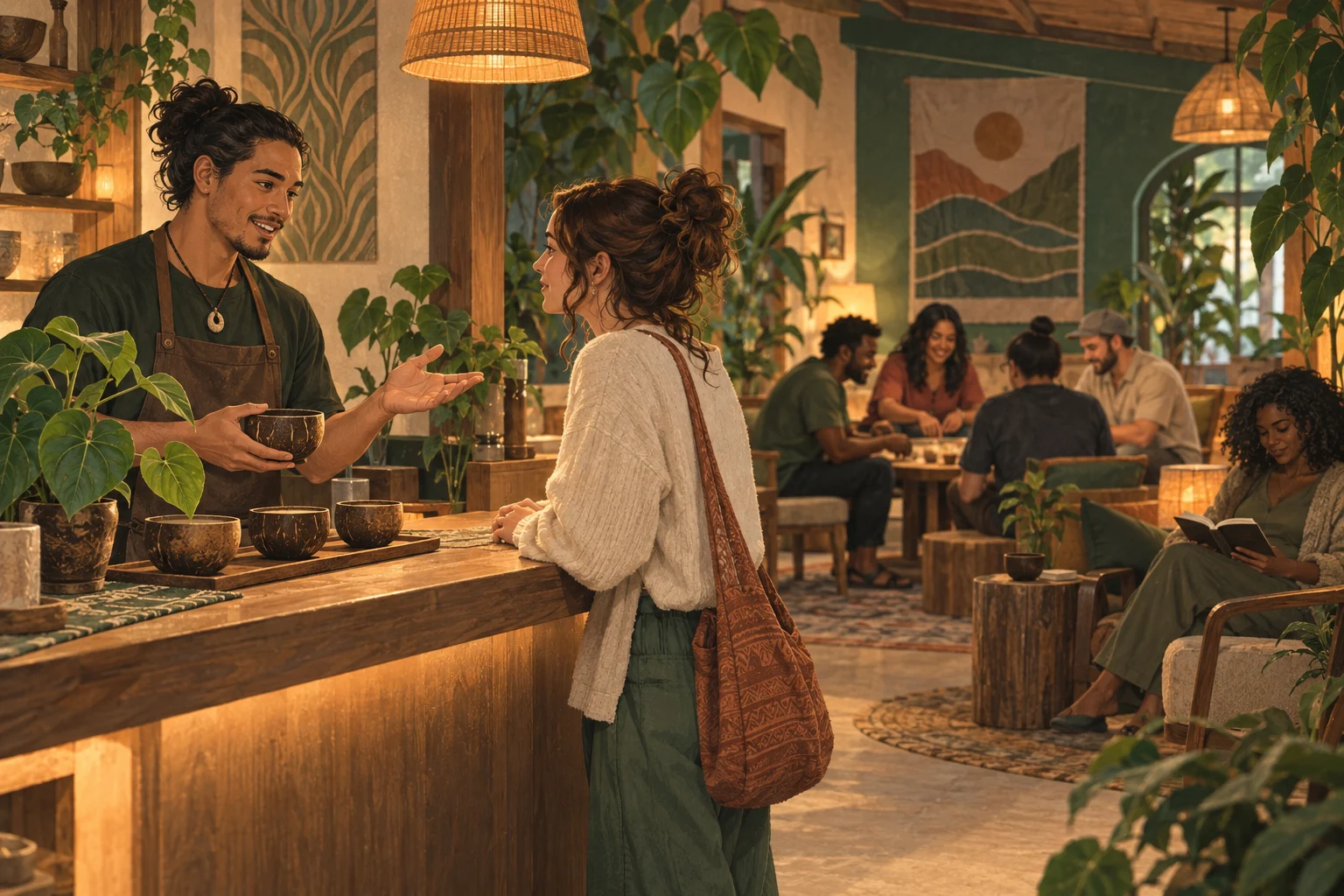
The path from curious visitor to regular
A first-time guest may be asking questions they never say out loud: Where do I order? What does this cost? Is everyone here already friends? Can I stay without joining a group?
Your job is to remove that uncertainty. Then make the next visit feel familiar.
- 01Discover
Is this a place for me?
Clear hours, menu, and atmosphere - 02Arrive
What do I do first?
A welcome and two useful choices - 03Settle in
Can I be comfortable here?
A suitable seat and a check-in - 04Return
Why should I come back?
One specific invitation - 05Belong
Will the next visit feel familiar?
Recognition and a repeatable occasion
Before spending more on an offer, find the point where guests get stuck.
| What you notice | Fix this first | What to watch next |
|---|---|---|
| Guests stare at the menu or ask several price questions | Offer two relevant choices and state the full price | Which questions still repeat? |
| Solo guests order, look around, and leave | Explain seating and offer a choice of quiet or social space | Do guests find a comfortable place to settle? |
| An event draws newcomers who never return | Give each guest a relevant next date and name the host | Do attendees return on another day? |
| Discounts get used but visits do not repeat | Review the experience, occasion, and offer economics | Are return visits increasing enough to justify the cost? |
1 Make the first order easy
Ask one useful question:
“First time here, or first time trying kava?”
Someone who knows kava needs help understanding your bar. Someone new to kava may also need a short explanation of the drink, its taste, and the choices on your menu.
Start with the answer they need. Save the deep history and detailed product discussion for guests who ask. You can share your beginner guide to kava for further reading.
Offer two relevant choices
Try:
“Would you like to try traditional kava, or start with flavors you usually enjoy? I can explain the ingredients, size, and price of either.”
Use options your bar actually serves. Explain what is in a flavored drink, including whether it contains kava, kratom, caffeine, or another ingredient. A new guest should be able to tell those products apart.
Create a small Start here section on the menu. For each option, show:
- The drink name and plain-language ingredients.
- What it tastes like, without promising an effect.
- The serving size and full price, including any paid add-ons.
- One relevant alternative if the guest dislikes that flavor or ingredient.
Ask a friend unfamiliar with your menu to order from it. Every question they ask is a clue about what to clarify.
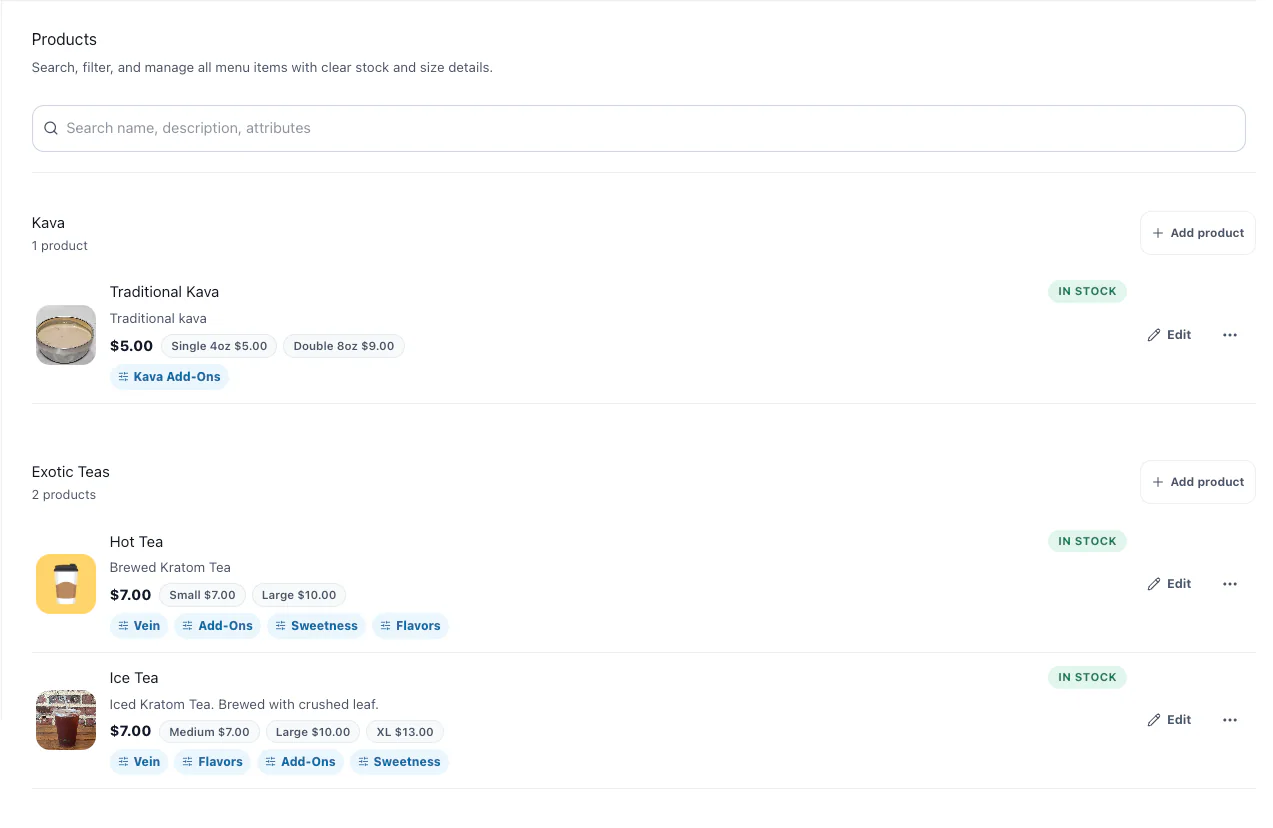
HappyKava’s Menu Maker supports products, sizes, prices, add-ons, and stock status. If your bar uses it, check that the menu guests see matches what staff can serve that shift. An unavailable item should have a clear alternative.
Set honest expectations
Avoid promising relaxation, better sleep, anxiety relief, or a particular sensation. Do not make “keep drinking until you feel it” part of the welcome. Give straightforward product information and respect a guest’s decision to stop or choose something else.
Keep one clear safety reference available to staff: NCCIH’s kava guidance covers risks and interactions, including avoiding combinations with alcohol or sedatives. Direct individual health or medication questions to a qualified clinician.
2 Help guests find their place
Explain the small things a regular already knows: where to order, where guests may sit, how service works, and whether an event is about to start. When you are busy, acknowledge the arrival and explain what happens next.
“Welcome in. I’ll be with you after this order. You can take a look at the menu here, and I’ll help with the choices.”
Then give the guest control over how social the visit becomes:
“Looking for a quiet break, or would you like to meet a few people?”
If they want company, ask before making an introduction. If they want quiet, point them toward a suitable seat and let them settle. Someone reading alone can be just as valuable a regular as the person hosting game night.
Check on the experience
Once the guest has had a chance to settle in, ask:
“How is the taste? Anything about the menu or the bar still unclear?”
Listen for a specific problem you can solve. Avoid turning every check-in into another sales pitch.
If they dislike the drink: “Thanks for telling me. Is it the flavor or something else? Let me explain the alternatives and what I can do under our replacement policy.”
If the bar feels too cliquey: Offer a seat, a host introduction, or a clearly open activity. Telling someone to “just jump in” leaves the awkward part to them.
If the wait is frustrating: Acknowledge it, give an honest update, and offer the choices you can deliver. Do not invent a wait time to keep the guest from leaving.
3 Give one specific reason to return
“Come back sometime” gives the guest nothing to plan around. Connect the invitation to something they told you.
“You mentioned board games. We have a beginner-friendly game night on [day] at [time]. [Host] helps people join a table, so coming alone is fine.”
Or:
“If you prefer a quieter visit, [day and time] is usually a better fit. Here’s where we keep our hours and event schedule.”
Use those claims only when they are true for your bar. A quiet-time recommendation needs to reflect your actual traffic; an event invitation needs a real host and current details.
Give one reliable next step: save the event, check the current bar page, or take a simple printed invitation. Do not send a guest through several signups to find the date.
Make the event work for someone arriving alone
A recurring event gives people a predictable occasion to return. The welcome still needs an owner.
Use this event card before announcing the next date:
| Detail | Decide before publishing |
|---|---|
| Occasion | What will a guest actually do, and who is it suitable for? |
| Time | Clear start and end times, in the bar’s local time |
| Host | One named person responsible for welcoming arrivals |
| Solo arrival | Where a newcomer goes and how they join |
| Entry and capacity | Price, reservation requirements, and what happens if full |
| Changes | Who updates the event listing and tells guests about cancellation |
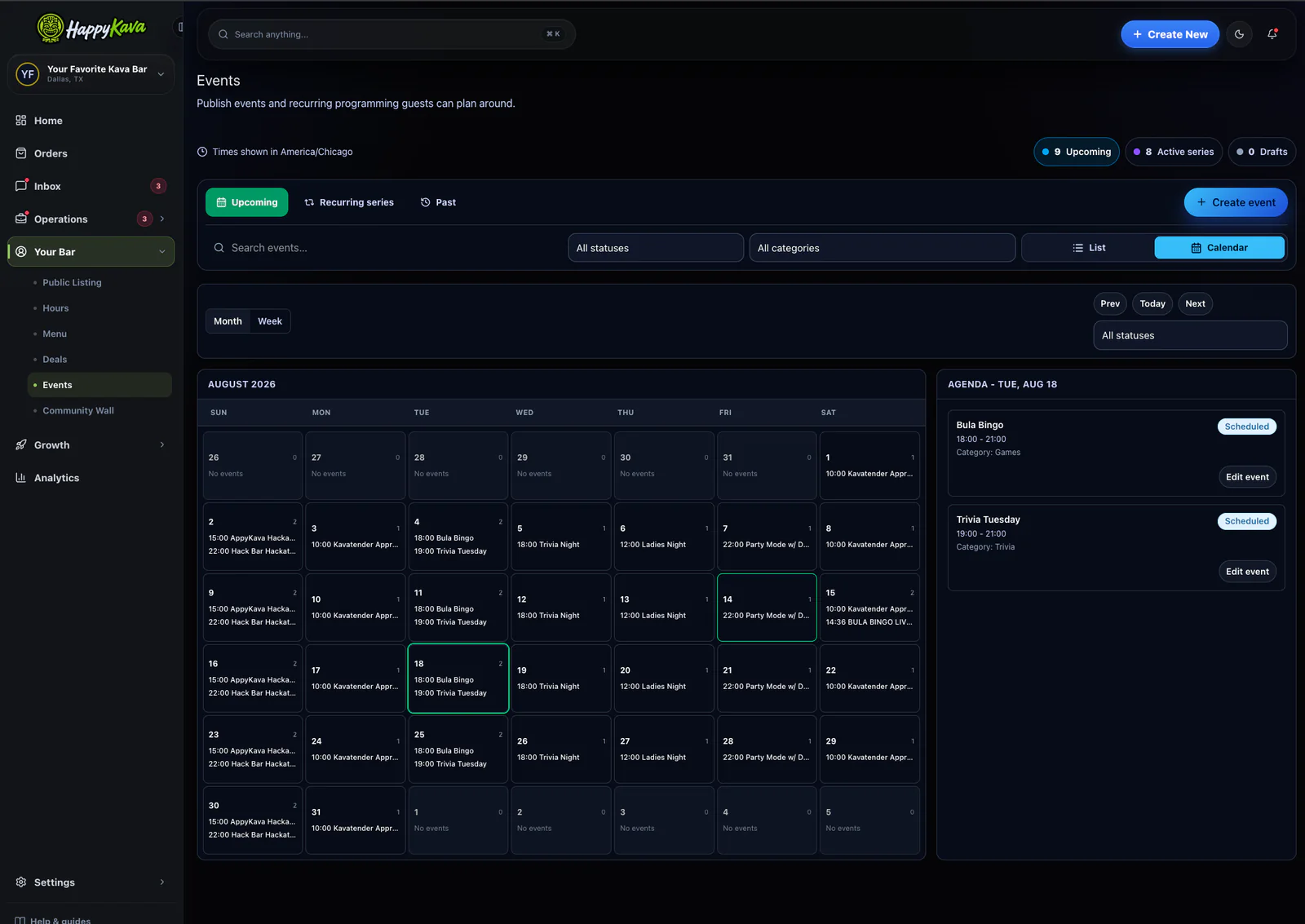
HappyKava supports one-time and recurring events. Where available in your dashboard, use that calendar to keep the invitation consistent. Recheck the host, time, and cancellation details before each occurrence.
4 Make the second visit feel familiar
A return visit is the beginning of a pattern. It is also a chance to disappoint someone who expected the same welcome.
Start with a simple acknowledgment:
“Good to see you again. Would you like what you tried last time, or something different?”
Only refer to a previous order if you remember it accurately. Otherwise, ask. A confident guess can make the guest feel less recognized.
Then help them build an easy routine:
- Repeat the useful part. If they liked a quiet seat, make that option clear again.
- Introduce continuity. Point out the next occurrence of an event they enjoyed.
- Let preferences develop. Ask what they liked instead of assigning them a usual order immediately.
- Recognize without intruding. Use a name or preference they willingly shared; avoid recording personal disclosures unrelated to service.
Brief the next shift on the service standard so hospitality does not depend on one charismatic kavatender. Every guest should be able to get a clear explanation and a welcome.
5 Choose an offer you can afford
A return benefit can help someone act on an invitation. First decide what behavior you want: another visit on a separate day, attendance at a quieter recurring event, or continued participation in an established loyalty program.
You do not need a discount for every guest. Match the approach to the problem.
| Approach | Useful when | Define before launch |
|---|---|---|
| A personal event invitation | The guest wants a social activity or a predictable occasion | Date, host, entry details, and how a solo guest joins |
| A modest return credit | You want to test whether a small incentive encourages another visit | Eligible item, minimum purchase if any, expiry, and separate-visit rule |
| A simple bar-run loyalty benefit | You can track it consistently across shifts | How it is earned, the benefit, exclusions, and redemption steps |
| HappyKava Regulars where enabled | Your bar has access and staff understand its current configuration | The actual qualifying action and perk shown for your location |
Avoid open-ended first-visit drinking deals. A useful offer has a clear benefit and a defined cost; it does not depend on guests consuming more to reach a promised effect.
Check the economics before printing the offer
Here is an illustrative example, not a recommended price or discount:
| One eligible return purchase | Amount |
|---|---|
| Menu price before tax | $10.00 |
| Return credit | −$2.00 |
| Product and disposable cost | −$3.20 |
| Other variable serving costs | −$0.80 |
| Contribution before fixed costs | $4.00 |
Replace every number with your own costs, including payment fees, offer-specific fees, and additional labor where applicable. This example leaves $4 toward fixed costs and profit; it does not prove the promotion created an extra visit.
Some guests would have returned without a discount. Compare similar groups or periods, account for differences such as events, and review the total promotion cost before expanding it.
Write the rules in one place
Fill in this template before staff mention the offer:
Return benefit: [Benefit] on [eligible item or purchase]. Valid [start date] through [expiry date], on a separate visit. [Purchase requirement, if any.] [One-use and combining rules.] Redeem by [the process your team actually supports].
Make the printed offer, online description, and staff explanation match. Practice a normal redemption and a failed-phone scenario. Decide who handles exceptions before a guest is standing at the counter.
Keep review requests separate from rewards. Ask for honest feedback without tying a benefit to a review or steering only satisfied guests toward public review sites. Google’s review policy prohibits incentivized reviews and selective solicitation of positive reviews.
6 Follow up with something worth opening
If a guest chooses to receive messages through a channel you support, send a useful invitation with accurate details. One relevant message is a sensible starting test.
“Thanks for visiting [bar]. Our next [event] is [date] at [time]. [Host] can help you join when you arrive. Details: [current event link].”
Use only a message channel the guest has agreed to receive, with the appropriate opt-out. If they do not want messages, give them a current event link or printed card they can keep.
Measure visits associated with the invitation where you can. Opens, clicks, and followers can help explain interest, but they are not return visits.
7 Connect discovery to the experience inside the bar
BestKavaBar helps people discover and compare bars. HappyKava gives participating owners tools to keep bar information, menus, deals, and events current. Start with the owner workspace and use the features available to your location.
For this retention workflow, make four checks:
- Before arrival: Are the hours, address, menu, and atmosphere clear?
- At the counter: Can staff explain the same prices and offers a guest saw online?
- Before departure: Does the event link lead to the correct date and details?
- On return: Can the next shift recognize and honor the same eligible benefit?
Use Passport as a welcome opportunity
HappyKava Passport is currently free for signed-in app users. It provides one Passport Shell per participating location per active cycle, with inclusions set by the bar. A directory listing alone does not mean a bar participates. Check the current Passport details and your location’s status.
Treat a Passport guest as a guest to welcome. Explain what is included and use the live redemption screen with staff validation; a screenshot is not a redemption. Then offer a relevant reason to visit again.
Use Regulars only where it is enabled
HappyKava’s Regulars and Rewards is being enabled bar by bar. If your location has access, explain its actual current benefit and qualifying action. Avoid promising a universal reward schedule or a feature that is not available in your dashboard.
For broader acquisition, listings, and promotion planning, use the kava bar marketing guide. Keep this experiment focused on the experience from first arrival to the next visit.
8 Measure the second visit correctly
Start with a question your team can answer: Of the identifiable first-time guests in a defined group, how many came back on a separate day within 30 days?
Use the same identification method throughout the test. That might be an opt-in loyalty record or another existing guest record you are authorized to use. A check-in or sale alone does not tell you someone is a first-time guest unless your records support that conclusion.
If you cannot reliably match visits, report that limitation. Do not turn a rough staff estimate into a precise retention rate.
Give each guest the full window. Someone who first visits on the last day of your test still needs another 30 days of observation. Mark a group in progress until every guest’s window has closed.
Count each returning guest once. Keep known locals and travelers separate when you have that context; a visitor passing through has a different opportunity to return. Report identification coverage so app users or loyalty members are not mistaken for all guests.
| Record each week | What it helps you decide |
|---|---|
| First-visit dates, identification method, and coverage gaps | Whether groups are comparable |
| Identifiable first-time guests and unique returners | The return rate after the full window closes |
| Offer uses, associated sales, and promotion cost | Whether the offer is affordable |
| One recurring guest complaint or question | The next service improvement |
| What changed and when | What might explain a change in results |
Compare against your own earlier comparable groups. Change one major part of the experience at a time where practical. A larger return rate after a promotion is useful evidence to investigate, not automatic proof that the promotion caused it.
Put it into practice over 30 days
Assign a person to each action. A small bar may have one manager own the whole plan; a larger team can split training, events, and measurement.
| When | Work to complete | Done when |
|---|---|---|
| Before the next shift | Choose two menu options, one invitation, and a welcome lead | Every staff member can explain them clearly |
| Week 1 | Run the welcome sequence and record recurring friction | The team agrees on the first service problem to fix |
| Week 2 | Publish one repeatable occasion with a host | Solo guests know where to go and what to expect |
| Week 3 | Test one return offer only if needed | Terms, cost, budget, and redemption are clear |
| Week 4 | Review service feedback and early visits | You choose what to keep, change, or stop |
| After each group’s window closes | Calculate its full 30-day return rate | Every included guest had the same opportunity to return |
Use the printable owner kit at a short pre-shift briefing. Walk through a new guest’s order, an invitation, and a redemption. Let staff try the words in their own voice, then correct anything confusing.
Common owner questions
What if guests do not want to socialize
Make quiet visits easy. Explain seating, keep service attentive, and offer an invitation only if it fits. Belonging can mean being comfortable spending time alone.
Do we need a loyalty program first
No. You can improve greetings, menus, event hosting, and invitations immediately. Add a program when you can explain and honor it consistently across shifts.
What if we mostly serve tourists
Focus on the visit they can realistically make. Recommend another suitable time while they are in town and make your information easy to save. Evaluate travelers separately from local guests when possible.
What if an offer or app screen is unavailable
Explain the problem plainly and ask the designated manager to resolve it under your policy. Keep normal service moving. Do not invent a redemption or promise an unavailable feature; direct the guest to a working menu or event link for the rest of their visit.
What return rate should we aim for
Start with your own baseline using a consistent guest group and observation window. There is no universal target in this guide. A useful improvement brings more appropriate repeat visits at a cost your bar can sustain.